





What battery types work best with off-grid solar inverters?
- 1. How do I determine the appropriate off-grid solar inverter size for my energy needs?
- 2. What are the key differences between pure sine wave and modified sine wave inverters, and which is better for off-grid systems?
- 3. How do I ensure compatibility between my off-grid solar inverter and battery bank?
- 4. What are the advantages and disadvantages of different battery types for off-grid solar systems?
- 5. How can I extend the lifespan of my off-grid solar batteries?
- 6. Are there any emerging battery technologies suitable for off-grid solar applications?
1. How do I determine the appropriate off-grid solar inverter size for my energy needs?
Selecting the right off-grid solar inverter involves assessing your total energy consumption and matching it with the inverter's capacity. Begin by calculating the combined wattage of all devices you intend to power simultaneously. For instance, if your appliances total 3,000 watts, you'll need an inverter that can handle at least this load, with some margin for safety. It's also crucial to consider the surge capacity, as certain devices like refrigerators and air conditioners require additional power during startup. Inverters are typically rated for continuous and surge (peak) power; ensure both align with your system's demands. Additionally, factor in the inverter's efficiency, as higher efficiency reduces energy losses and enhances overall system performance. Consulting with a professional installer can provide personalized recommendations tailored to your specific energy requirements.
2. What are the key differences between pure sine wave and modified sine wave inverters, and which is better for off-grid systems?
Pure sine wave inverters produce a smooth, consistent waveform that closely resembles the power supplied by the grid, making them suitable for sensitive electronics and appliances. Modified sine wave inverters generate a stepped waveform, which is less ideal for delicate devices and can lead to inefficiencies or potential damage. For off-grid systems, especially those powering sensitive equipment like computers, medical devices, or high-efficiency appliances, pure sine wave inverters are recommended due to their superior performance and safety. While modified sine wave inverters are more cost-effective, they may not provide the reliability and longevity required for off-grid living.
3. How do I ensure compatibility between my off-grid solar inverter and battery bank?
Ensuring compatibility between your off-grid solar inverter and battery bank is vital for system efficiency and longevity. Start by matching the battery bank's voltage with the inverter's input voltage; common configurations include 12V, 24V, and 48V systems. For example, if your inverter operates at 48V, your battery bank should also be configured to 48V. Next, verify the communication protocols supported by both the inverter and the battery management system (BMS). Many modern inverters and batteries use protocols like CAN or RS485 for seamless communication. It's essential to ensure that the inverter can properly communicate with the BMS to manage charging and discharging cycles effectively. Consulting the manufacturer's compatibility lists or seeking professional advice can help in selecting compatible components.
4. What are the advantages and disadvantages of different battery types for off-grid solar systems?
When choosing a battery for your off-grid solar system, consider the following types:
Lithium Iron Phosphate (LiFePO4): Offers a high cycle life (3,000–6,000+ cycles), deep depth of discharge (80–100%), and low maintenance. They are lightweight and compact but come with a higher upfront cost. LiFePO4 batteries are known for their safety and thermal stability.
Absorbent Glass Mat (AGM) Lead-Acid: Provides a moderate cycle life (400–1,200 cycles) and depth of discharge (50–60%). They are maintenance-free and cost-effective but are heavier and bulkier compared to lithium options.
Gel Lead-Acid: Similar to AGM in terms of cycle life and depth of discharge but offers better performance in extreme temperatures. They are also maintenance-free but are heavier and have a lower energy density.
Flooded Lead-Acid: Offers a lower upfront cost but requires regular maintenance, including watering and cleaning. They have a shorter lifespan and lower depth of discharge compared to other types.
Each battery type has its trade-offs regarding cost, maintenance, lifespan, and performance. Assessing your specific energy needs, budget, and maintenance capabilities will guide you to the most suitable choice.
5. How can I extend the lifespan of my off-grid solar batteries?
Extending the lifespan of your off-grid solar batteries involves several key practices:
Avoid Deep Discharges: Regularly discharging batteries to very low levels can significantly shorten their lifespan. Aim to keep the depth of discharge (DoD) within recommended limits, typically around 50% for lead-acid batteries and up to 80% for lithium batteries.
Maintain Proper Charging: Use a quality charge controller to ensure batteries are charged correctly, preventing overcharging or undercharging, which can damage the cells.
Monitor Battery Health: Regularly check voltage levels, temperature, and overall battery condition. Implementing a Battery Management System (BMS) can provide real-time monitoring and protection.
Temperature Control: Store and operate batteries within the manufacturer's recommended temperature range. Extreme temperatures can degrade battery performance and lifespan.
Regular Maintenance: For lead-acid batteries, ensure terminals are clean and connections are tight. For lithium batteries, ensure firmware is up to date and that the BMS is functioning correctly.
By implementing these practices, you can maximize the efficiency and longevity of your off-grid solar battery system.
6. Are there any emerging battery technologies suitable for off-grid solar applications?
Yes, several emerging battery technologies show promise for off-grid solar applications:
Flow Batteries: Offer long cycle life and can be discharged completely without damage. They are scalable and suitable for large-scale energy storage but are currently more expensive and less energy-dense than lithium options.
Sodium-Ion Batteries: Utilize abundant and non-toxic materials, potentially offering a more sustainable and cost-effective alternative to lithium-ion batteries. However, they are still in the development stage and not yet widely available.
While these technologies are promising, they are not yet as widely adopted or proven in off-grid solar applications as traditional lithium-ion and lead-acid batteries. It's essential to stay informed about advancements and consult with professionals when considering emerging technologies for your system.
In conclusion, selecting the right off-grid solar inverter and battery system requires careful consideration of your energy needs, budget, and maintenance capabilities. By understanding the nuances of inverter types, battery options, and best practices for system maintenance, you can build a reliable and efficient off-grid solar solution.
For personalized advice and a detailed quote tailored to your specific requirements, please contact us at info@csinverter.com or visit our website at www.csinverter.com.


Modified Sine Wave Inverters
Is it normal for the inverter to heat up when working?
It is normal for it to generate some heat when working. If the temperature is too high (e.g., hot to the touch), please stop using it and check if the load is overloaded.
Can I customize the logo?
Yes, OEM/ODM service is available.
Does the UPS function require additional mains connection?
Yes. The inverter needs to be connected to a home/office socket via the included mains cable, and the device will automatically detect the mains status; when the mains power is interrupted, it will switch to battery power immediately.
Pure Sine Wave Inverters
Can it run inductive loads like fridges or tools?
Yes, pure sine wave output supports all load types.
What is the difference between a pure sine wave inverter and a modified sine wave inverter?
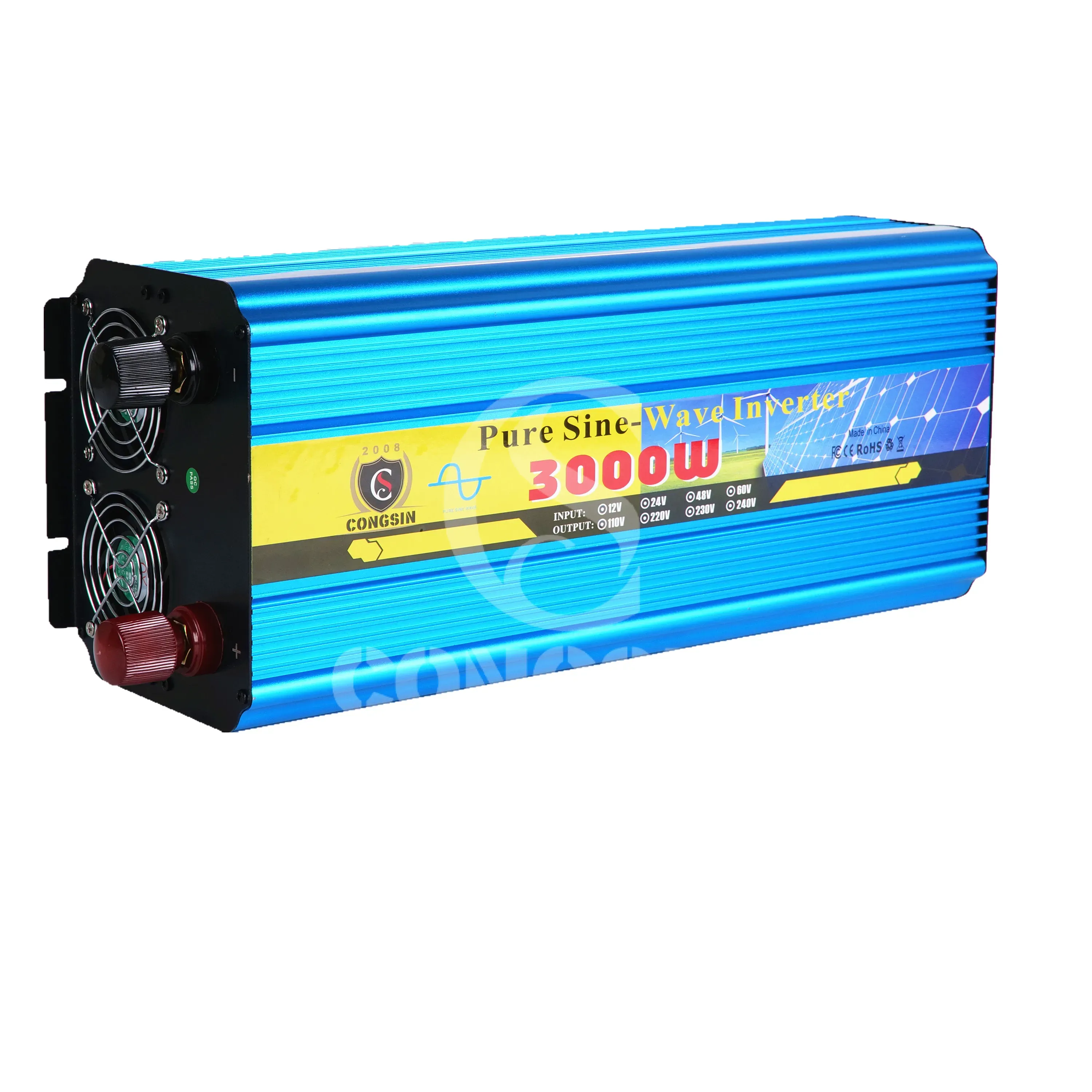
Pure sine wave inverter has an output waveform close to mains power with low distortion rate (<3%), which can be safely adapted to precision devices such as computers, medical instruments, and inverter home appliances; modified sine wave inverter has a notched waveform, which easily causes device heating, malfunction or damage, and is only suitable for simple devices such as bulbs and fans.
Get in Touch with Our Team
You can also communicate with us directly through our online contact form. Please fill in the following information, and our team will contact you as soon as possible after receiving your message.

CONGSIN is a trusted OEM factory for power inverters, solar charge controllers, and DC converters. Reliable solutions for global B2B buyers.
 High Quality
 7/24 Service
 Guaranteed Warranty
© 2025 Congsin. All Rights Reserved.